Connecting Pixels with People:
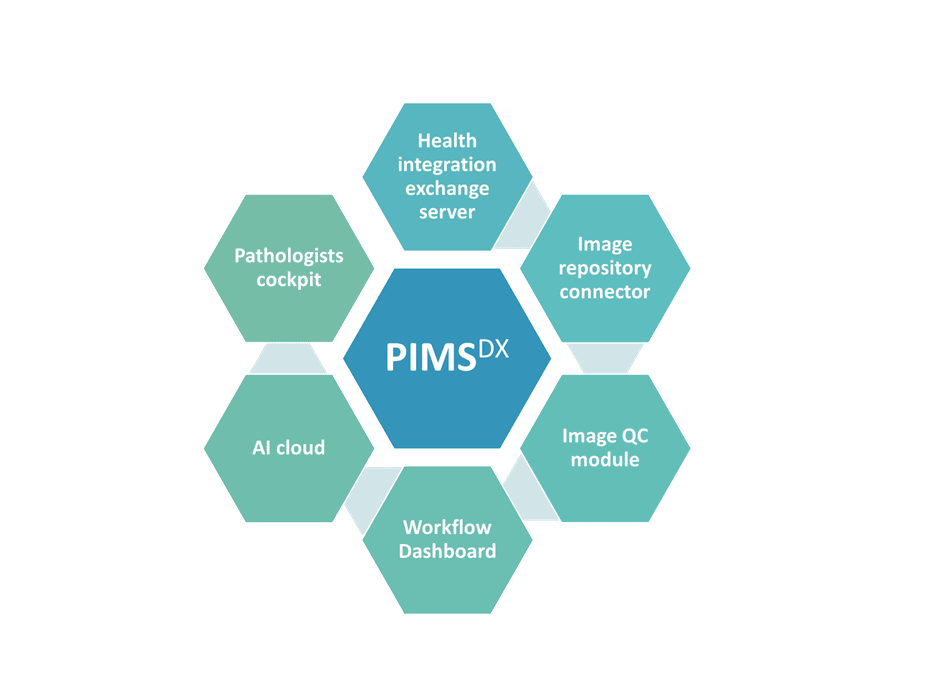
PIMS DX is a CE-IVD certified platform specifically designed to meet the needs of diagnostic pathology laboratories. It enables efficient management and viewing of digital pathology images.
Main features:
Comprehensive image management: Secure and scalable management of digital pathology images, regardless of format or storage location.
Universal image display: Support for numerous image formats, including proprietary formats from various providers.
Intuitive user interface: User-friendly design for professionals of all experience levels.
Integration and interoperability: Seamless integration with laboratory information systems (LIS) and support for HL7 or FHIR messages.
Expandability: Modular design enables adaptation to specific requirements, e.g. for training or research.
Web-based access: Access to images via a web browser without additional software installation.
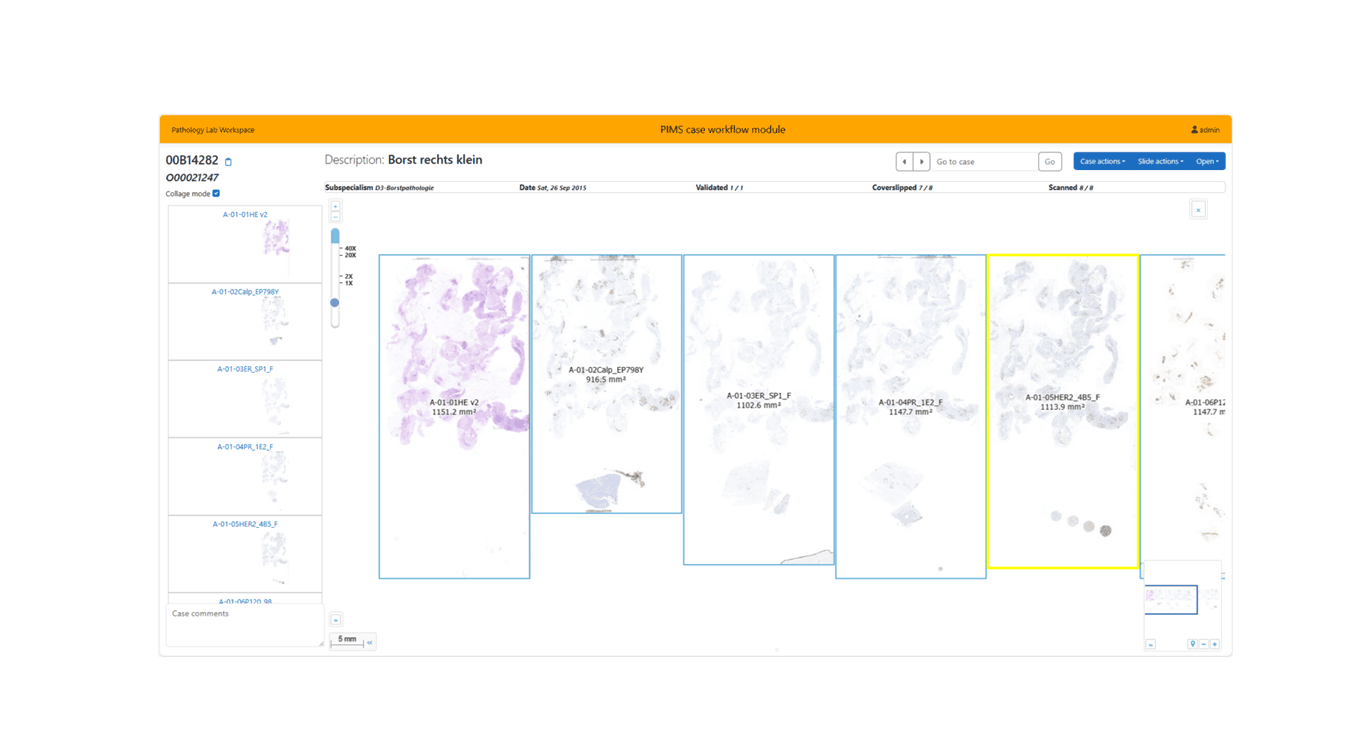
Metadata and annotations: Capture and integration of metadata and support for annotations, including heatmaps and dot markers.
User management: Support of third-party directory services for scaling across multiple instances.
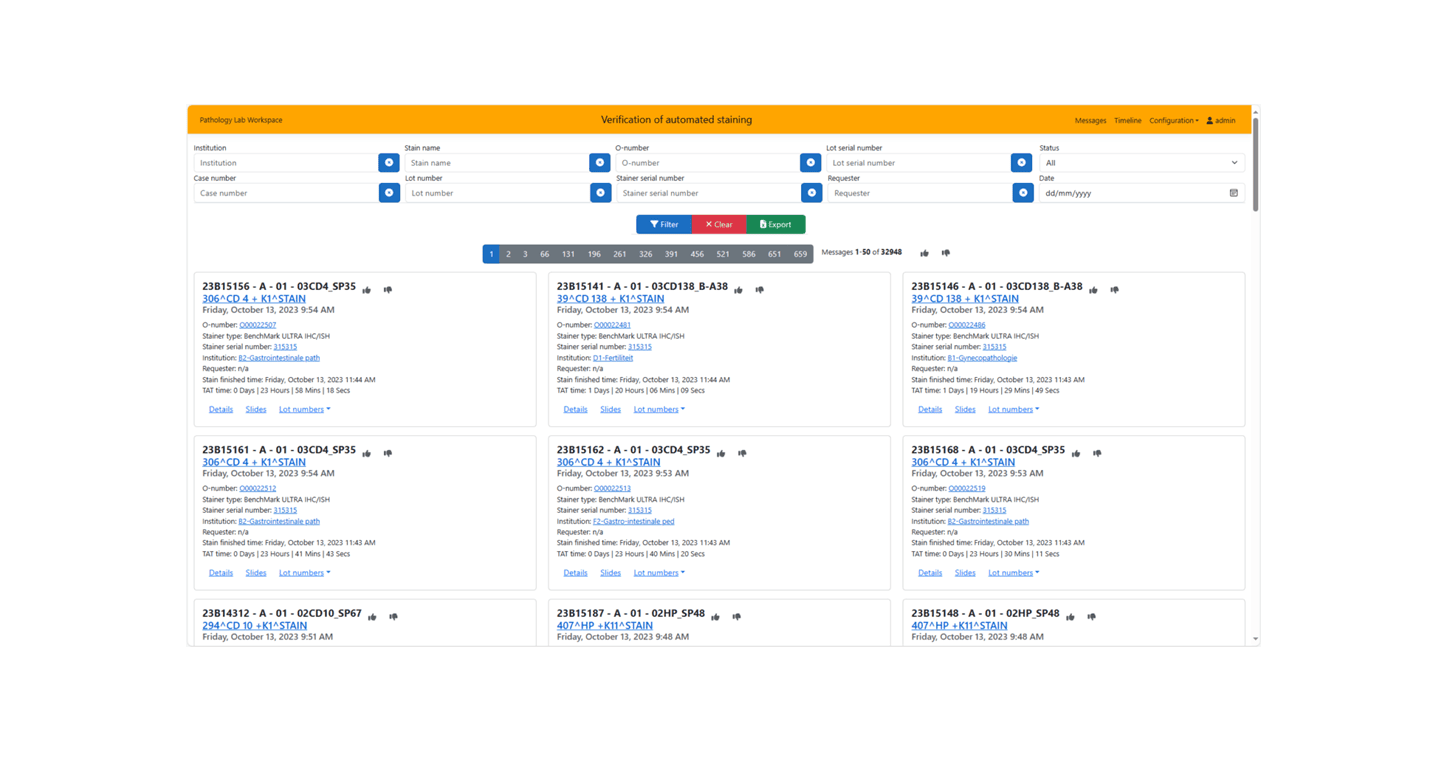
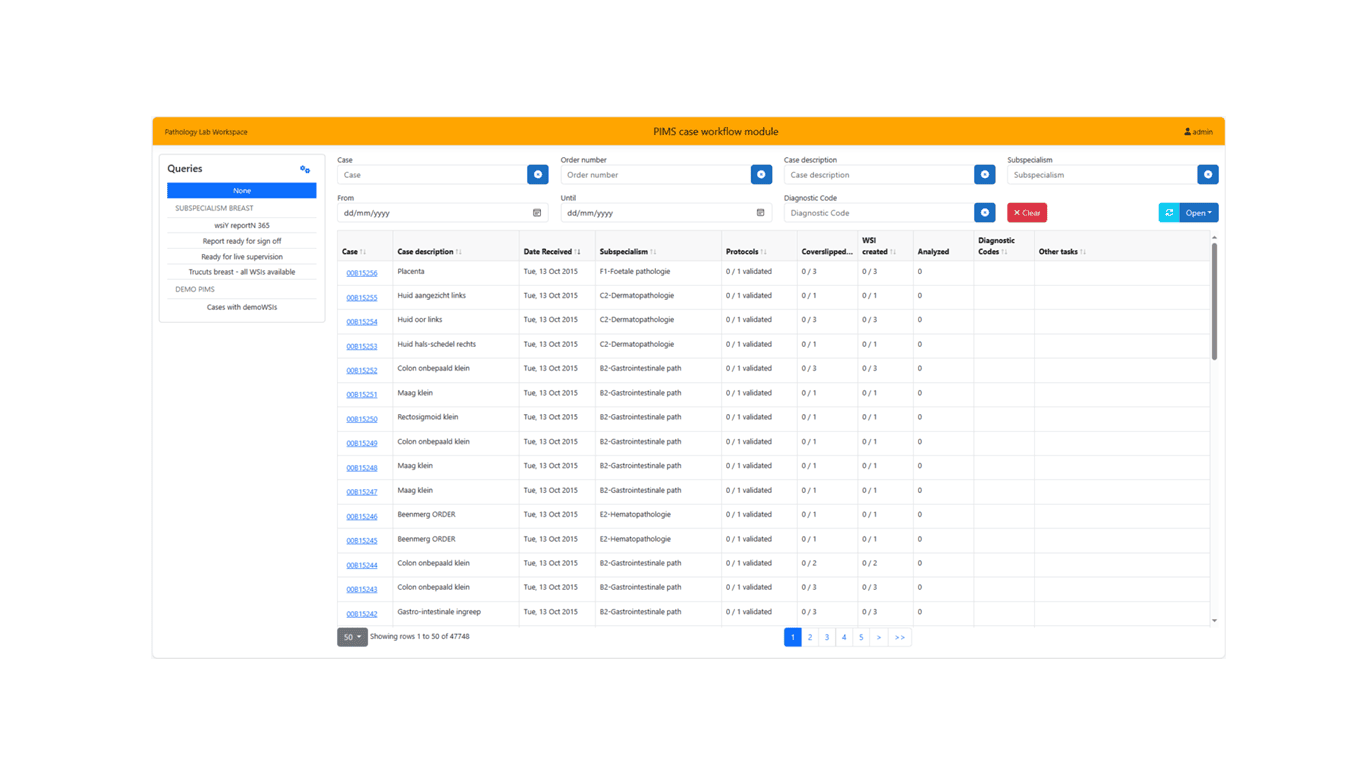
Flexible workflows: Configurable workflows with search and filter functions.
Diagnostic accuracy: Compliance with 21 CFR Part 11 and CE-IVD certification for diagnostic applications.
Both versions of PIMS are based on PMA.core technology, which enables a manufacturer-independent and powerful display of full-section images. PMA.core acts as an intermediary between various proprietary image formats and the end-user applications for digital pathology.
Advantages of PMA.core:
Universal support of image formats: Compatibility with a wide range of image formats, including proprietary formats.
User interface for different image types: Display of brightfield, fluorescence and Z-stack images.
Organization of images and metadata: Management of images, metadata and annotations in one environment.
User administration and access control: Administration of users and their access rights.
Flexibility in storage options: Support for various storage solutions, including local hard disks, network storage and cloud storage.
Regulatory compliance: Compliance with regulations such as 21 CFR Part 11 and CE-IVD for diagnostic applications.
Developer friendliness: Open APIs and SDKs for individual developments and extensions.